Resumen: Chile es uno de los países con mayor estrés hídrico a nivel mundial (Instituto de Recursos Mundiales, 2023). Esta condición responde, en gran medida, a un modelo de gestión del agua de carácter extractivista, ecocida y mercantil, instaurado durante la dictadura cívico-militar y sustentado en una hidropolítica del despojo (Fernández Droguett, 2023).
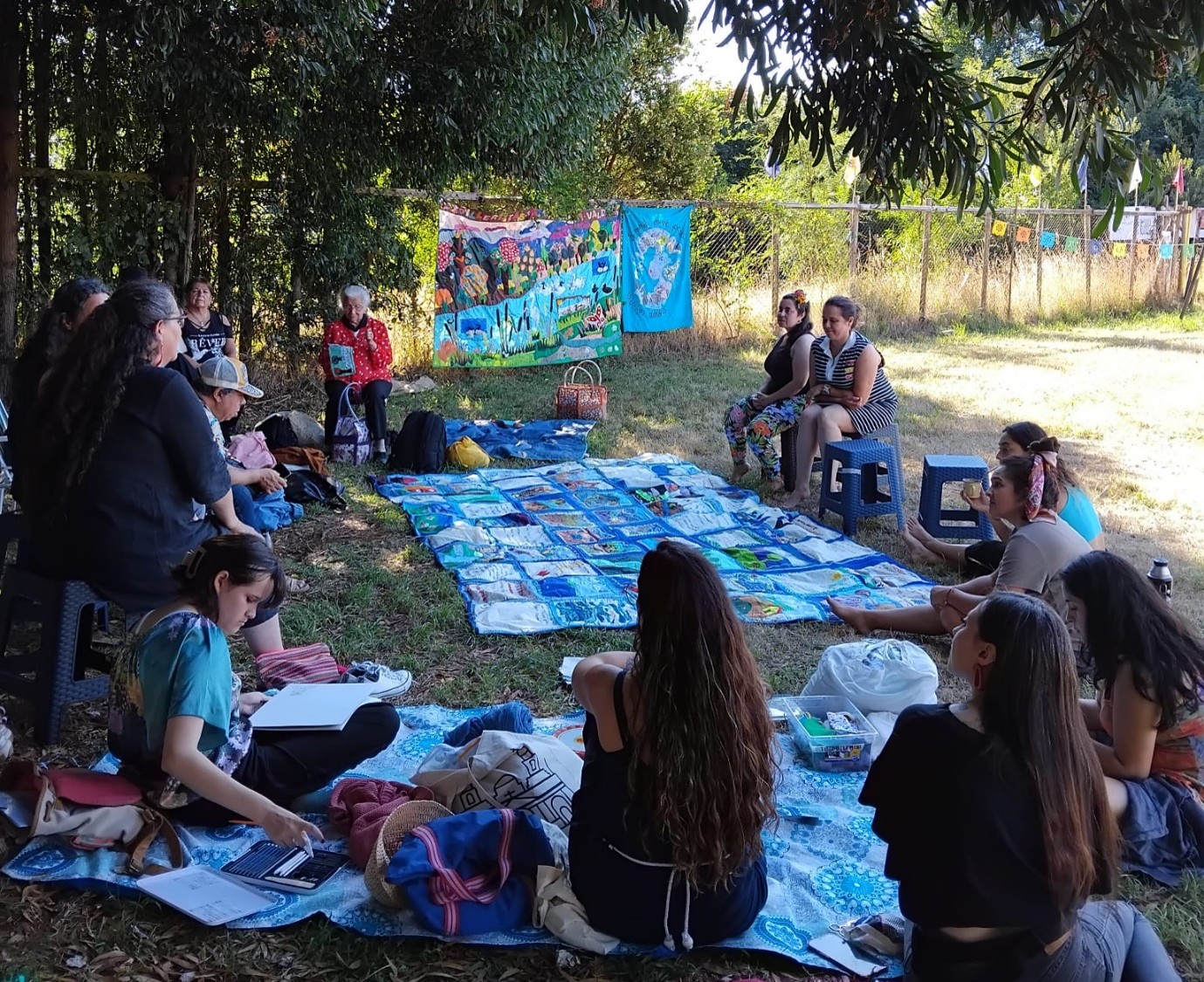
Como respuesta al «mercado del agua», emergen estrategias autogestionadas orientadas a la defensa de los cuerpos de agua (Neimanis, 2012). Entre ellas destacan las acciones textiles: prácticas de resistencia que ponen en valor gestos de cuidado, reciprocidad e interdependencia multiespecie, entre mujeres, aguas y textiles.
Desde una perspectiva hidrofeminista, este artículo presenta «AGU(J)A», un mapeo digital colaborativo que georreferencia y describe veintiséis experiencias de alianza entre textiles y textileras para la defensa, protección o vinculación con cuerpos de agua en Chile desde 2019 hasta 2025, profundizando en la amenaza identificada, la respuesta generada y la presencia del textil.
Palabras clave: textiles, textileras, hidrofeminismo, cuerpos de agua, crisis hídrica, defensa socioambiental
Abstract: Chile is one of the countries with the greatest water stress worldwide (Kuzma et al., 2024). This condition is largely due to a water management model that is extractive, ecocidal and mercantile in nature, established during the civic-military dictatorship and underpinned by a hydropolitics of dispossession (Fernández Droguett, 2023).
As a response to the «water market», self-managed strategies are emerging aimed at the defense of water bodies (Neimanis, 2012). Among these, textile actions stand out: resistance practices that value gestures of care, reciprocity and multispecies interdependence, between women, waters and textiles.
From a hydrofeminist perspective, this article presents to AGU(J)A, a collaborative digital mapping that georeferences and describes 26 experiences of alliances between textiles and textile workers for the defense of bodies of water in Chile from 2019 to 2025, delving into the identified threat, the response generated and the presence of textiles.
Keywords: textiles, women textile workers, hydrofeminism, water crisis, socio-environmental defense